

Emergency Beacons | Registration & Regulations
Emergency Beacons: A Guide to PLB, EPIRB, and ELT
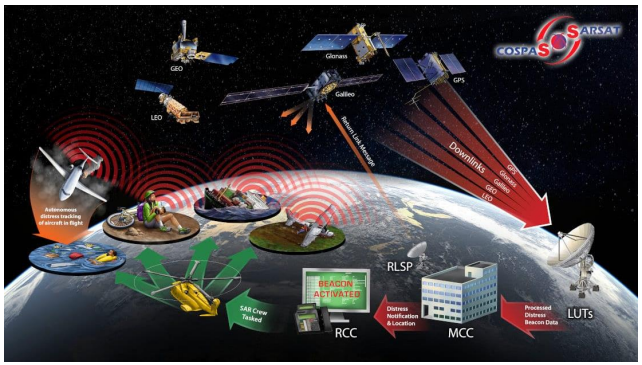
In the event of a life-threatening emergency, every second counts. That's where 406 MHz beacons come in – a crucial tool in the search and rescue process. There are three types of 406 MHz beacons: Personal Locator Beacons (PLB), Emergency Position-Indicating Radio Beacons (EPIRB), and Emergency Locator Transmitters. In this article, we'll delve into the differences between these beacons and their interaction with the U.S. SARSAT (Search and Rescue Satellite-Aided Tracking) Program.

Personal Locator Beacons (PLB)
PLBs are portable, handheld devices designed for personal use in emergency situations. They are typically used by outdoor enthusiasts, such as hikers, hunters, and adventurers, who may find themselves in remote areas with no cell phone coverage. PLBs transmit a distress signal to the SARSAT system, which then alerts local authorities and initiates a search and rescue operation.
Emergency Position-Indicating Radio Beacons (EPIRB)  EPIRBs are primarily used on boats and ships to send out a distress signal in emergency situations, such as a sinking vessel. They are designed to be mounted on a vessel and are typically larger and more powerful than PLBs. EPIRBs transmit a signal to the SARSAT system, which then alerts the U.S. Coast Guard and other authorities, who can quickly respond to the emergency.
Emergency Locator Transmitters
 ELTs are used in aircraft to send out a distress signal in emergency situations, such as a plane crash.
They are designed to be installed in an aircraft and are typically more complex than PLBs and EPIRBs. ELTs transmit a signal to the SARSAT system, which then alerts air traffic control and other authorities, who can quickly respond to the emergency.
Registration and Regulations
All 406 MHz beacons must be registered! Beacon owners must comply with regulations set by other partner agencies such as the Federal Communications Commission (FCC) and the National Oceanic and Atmospheric Administration (NOAA). Registration with NOAA helps ensure that the SARSAT system can quickly identify the location and owner of the beacon in the event of an emergency.
Registration
U.S. 406 MHz Beacon Registration - Online Access - Register Now!
The National Beacon Registration Database for U.S.-coded 406 MHz beacons is now available online. As a beacon owner, you can easily register and update your beacon information directly through the internet. You need to update your 406 MHz beacon registration whenever there is a change in your contact information or beacon details. This includes:
⦁ Changing your address or phone number
⦁ Acquiring a new boat or vessel
⦁ Selling or transferring your beacon to someone else
Additionally, your registration must be renewed every two (2) years to ensure that NOAA has up-to-date information. NOAA will contact you every two years to remind you to update your registration. It's important to make sure your beacon's registration remains current, as outdated information could delay rescue operations in an emergency.
Legal Requirement to Register
If you purchase a new or used U.S.-coded 406 MHz beacon, you are required by law to register it with NOAA. Additionally, if your registration information changes—such as your phone number, address, or if you acquire a new boat—you MUST update your registration with NOAA. Update Now
Selling or Transferring a Beacon
If you sell your 406 MHz beacon, it's crucial to notify NOAA of the transfer. Let the buyer know they must register the beacon in their name. Otherwise, you may be contacted by rescue authorities if the beacon is activated. Provide the new owner with our contact information or direct them to this webpage to complete the registration process.
Already Registered? Update Your Information Online
If you’ve previously registered your beacon with NOAA but haven't accessed it online yet, you can now update or view your beacon details. Just make sure you have your 15-digit Unique ID handy to get started. Update Now
Keep Your Information Accurate
It’s essential to confirm that the registration information (especially your beacon ID) is correct after receiving confirmation of your registration. If there are any inaccuracies, notify NOAA immediately.
The ability to update your registration online provides a significant advantage—any changes you make are processed immediately, unlike the outdated method of faxing or mailing forms. Remember, your registration is valid for only two years. NOAA will contact you every two years to confirm your information, so be sure to re-register your beacon when prompted. Update Now
Your Role in Ensuring Accurate Records
It’s vital to keep your contact information up to date to ensure prompt and effective assistance in emergencies. Whenever your contact details change, please notify NOAA right away.
Important Reminder: You can always register or update your beacon online. If you prefer, you can print a registration form from our website and submit it by mail or fax.
Additional Information
To view or print forms, Adobe Reader is required. We recommend using the Adobe Acrobat toolbar to print forms, as it avoids compatibility issues with browsers.
Help us keep your information up to date, so we can help you in the event of an emergency!
Mail the original, signed registration form to NOAA at: (NOTE: U.S. Postal Mail only! No courier deliveries are accepted at this address. Please contact the SARSAT RGDB at 301-817-4515 or toll-free at 1-888-212-SAVE (7283) for information on other delivery options.)
NOAA
SARSAT BEACON REGISTRATION
NSOF, E/SPO53
1315 East West Hwy
Silver Spring, MD 20910